17.06.2026
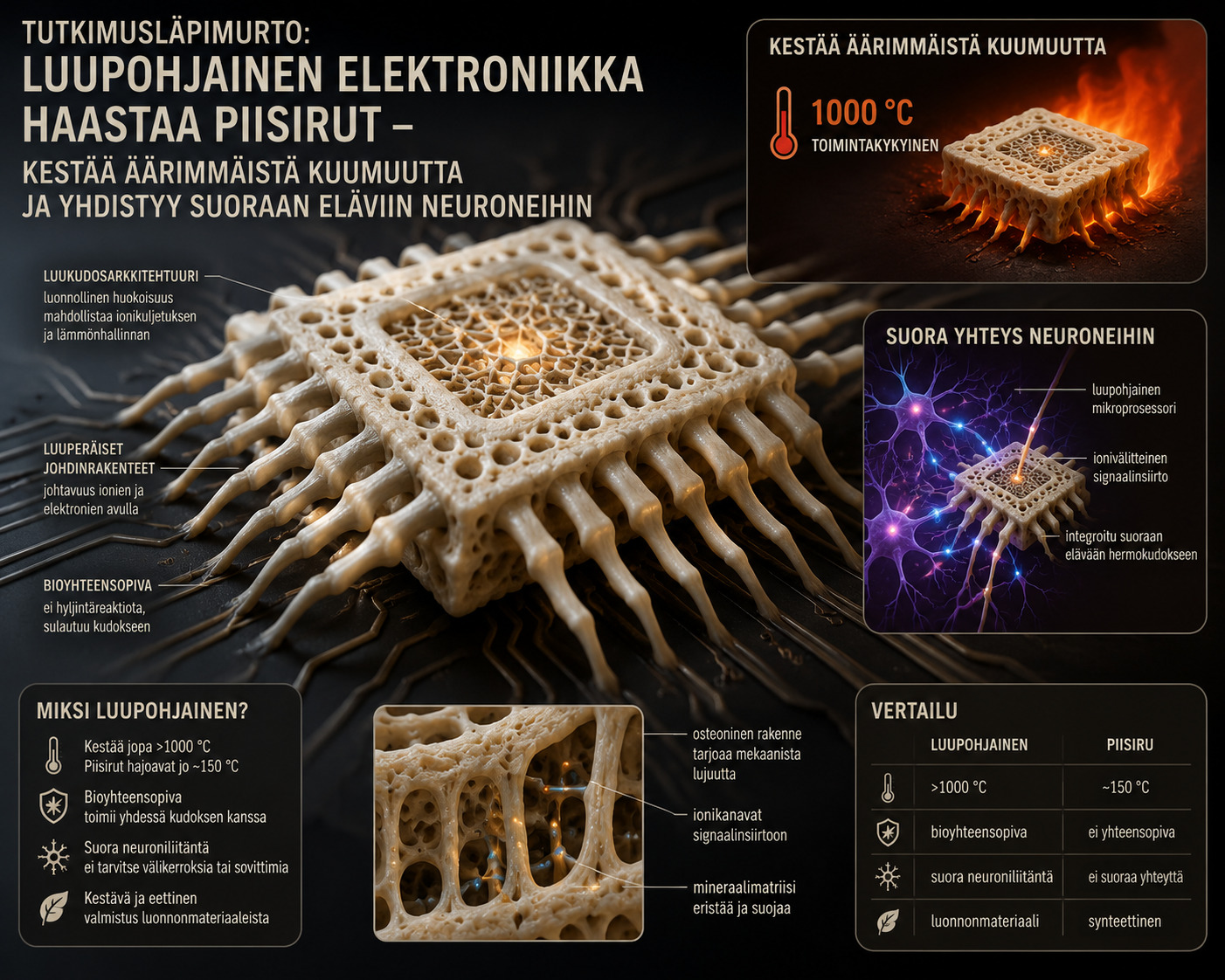
Hydroxyapatite, the mineral known from human bones and teeth, is attracting attention as a possible building block for future bioelectronics. Because it can withstand exceptionally high temperatures and is chemically close to living tissue, it may offer a new foundation for electronics that must operate not only in harsh environments, but also in direct contact with biological cells. Silicon-based electronics have dominated computing for decades, but their limits become clear in heat, radiation, implants and brain-like biological environments. Hydroxyapatite is not a conventional semiconductor and would not simply replace silicon in processors. Its value may instead lie in acting as a heat-resistant, biocompatible and ionically active platform for neural interfaces, sensors and neuromorphic components. One of hydroxyapatite’s strengths is its ceramic nature. Studies have shown that stoichiometric hydroxyapatite can remain stable at extremely high temperatures, up to about 1300 degrees ...




 Tilaa uutiset


